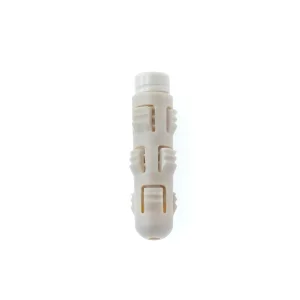
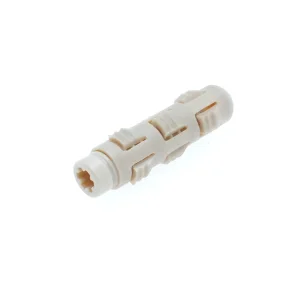
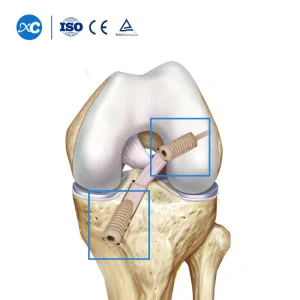
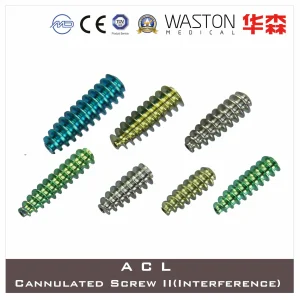
The global market for interference screws has witnessed exponential growth over the last decade, driven by the increasing prevalence of sports injuries and the rise in geriatric populations requiring ligament reconstructions. As the primary fixation device for Anterior Cruciate Ligament (ACL) and Posterior Cruciate Ligament (PCL) surgeries, interference screws have transitioned from traditional metal alloys to advanced polymer and bio-composite materials.
Currently, North America and Europe dominate the consumption market due to advanced healthcare infrastructure and high healthcare spending. However, the Asia-Pacific region is emerging as the fastest-growing hub, both in terms of clinical demand and manufacturing capacity. Chinese factories have moved up the value chain, transitioning from low-cost producers to high-end innovators in medical-grade PEEK (Polyether ether ketone) and PLLA (Poly-L-lactic acid) technologies.
The industry is shifting toward materials like PLLA and Biocomposites that gradually absorb into the body, eliminating the need for second surgeries and allowing natural bone ingrowth.
Advancements in 5-axis CNC machining allow for complex thread designs and cannulated structures, enhancing the mechanical "bite" and surgical ease-of-use.
 Tonk Orthopedic Implants