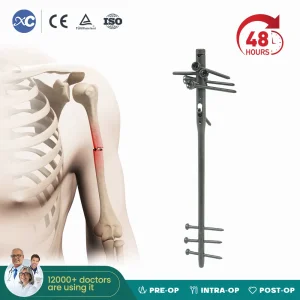
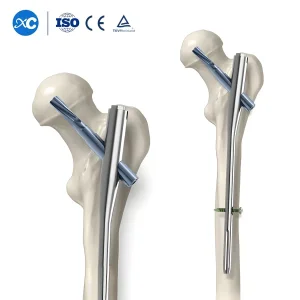
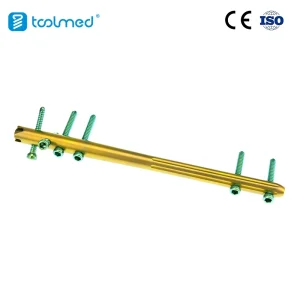
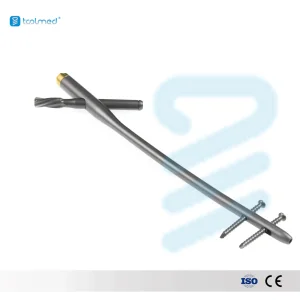
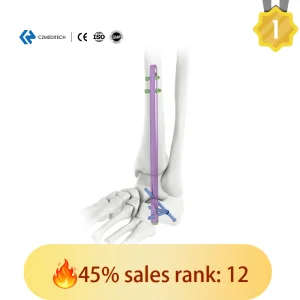
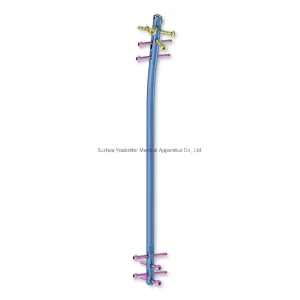
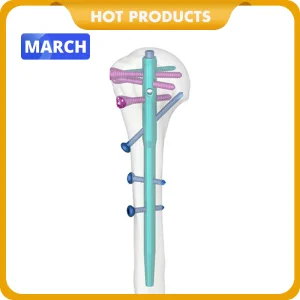
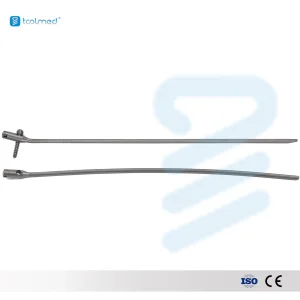
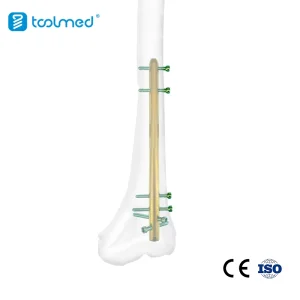
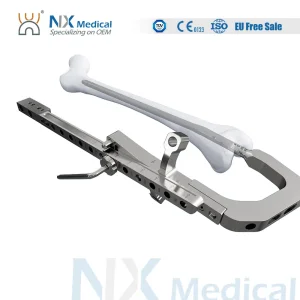
The global orthopedic trauma fixation market has witnessed a significant paradigm shift toward Interlocking Intramedullary Nails (IMNs). Once considered a secondary option to plate fixation, IMN is now the "Gold Standard" for treating long bone fractures of the femur, tibia, and humerus. This evolution is driven by the internal fixation's ability to provide superior biomechanical stability while maintaining a minimally invasive surgical (MIS) approach.
The global IMN market is projected to grow at a CAGR of 6.2%, driven by increasing geriatric populations and rising road traffic accidents globally.
Transition from Stainless Steel to Medical Grade 5 Titanium (Ti6Al4V ELI) has enhanced biocompatibility and MRI compatibility.
AI-assisted surgical planning and 3D-printed personalized guides are becoming standard in high-end orthopedic centers.
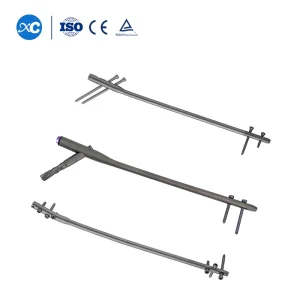
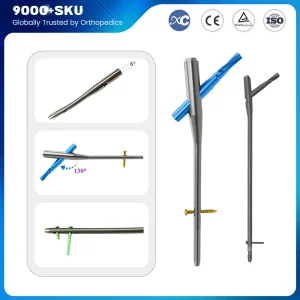
Modern surgical trends emphasize biological internal fixation. Unlike plates that disrupt the periosteal blood supply, intramedullary nails are "load-sharing" devices. They allow for early weight-bearing and faster callus formation. We are seeing a surge in demand for Multi-lock systems and Proximal Femoral Nail Antirotation (PFNA) designs, which specifically address the challenges of osteoporotic bone in aging populations.
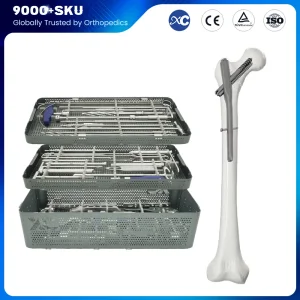
Global procurement for orthopedic implants is no longer just about the lowest price; it is about Supply Chain Resilience and Regulatory Compliance. Major healthcare providers in Europe, the Americas, and Southeast Asia are seeking partners who can provide comprehensive "Instrument + Implant" sets.
China has emerged as a global powerhouse in medical device manufacturing. Our factories combine the efficiency of mass production with the precision of high-tech R&D. When you source from a leading Chinese factory like OMA (established 1981), you gain several strategic advantages:
Our production facilities utilize Swiss-made CNC longitudinal lathes and German coating technologies, ensuring tolerances within microns.
By optimizing the industrial supply chain in China, we provide CE-certified implants at a fraction of the cost of Western brands without sacrificing performance.
Our R&D cycles are 40% faster than the industry average, allowing us to implement feedback from surgeons into new product iterations quickly.
OMA was established in the year 1981 and has since been engaged in the export of Medical equipments, Hospital equipments, Orthopaedic Implants & instruments, Laboratory equipments, Scientific & Educational products worldwide. Our goods have reached all continents from "The Americas" to "Europe" and beyond.
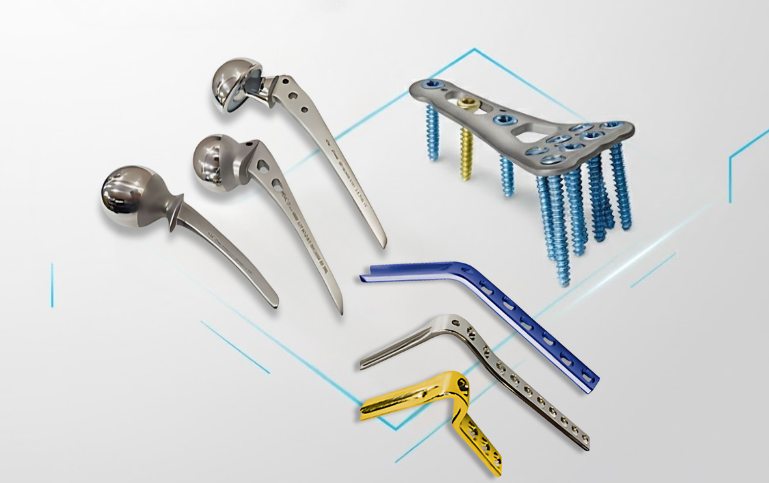
With 100+ employees who are involved in activities related to production, inspections and dispatch we assure you world class healthcare products delivered to your doorstep. Each employee has in-depth knowledge about the product and has years of experience to back that knowledge.

The logistics department makes sure that your goods reach you with the best available carriers in the shortest possible time frame.

Every OMA product comes with an assurance of high quality and zero compromise in its production, performance, and safety.
Our innovative approach towards product design and production help us bring you the best products at even better prices.

Our expert post-sales customer service team is available 24/7 to promptly answer all your queries regarding our products.
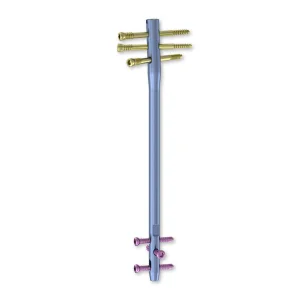
The interlocking mechanism is the critical innovation that solved the problem of rotation and shortening in earlier nail designs. By using proximal and distal locking screws, the nail becomes a rigid internal scaffold. This is particularly vital in comminuted fractures where the bone cannot support itself.
Our factory utilizes advanced surface treatments such as Anodic Oxidation, which not only gives the nails their distinct colors (Blue, Green, Gold) for easy size identification but also creates a hard, bio-inert layer that reduces metal ion release and enhances fatigue resistance.
Furthermore, our Elastic Intramedullary Nails (EIN) for pediatric patients are designed to follow the principles of the "three-point fixation," allowing for stable growth in children's fractures without damaging the epiphyseal plates.
 Tonk Orthopedic Implants