Why Is Production Tech Important for Orthopedic Implants?

Time:2026-10-21 Author:Sophia
0%

Why is production technology important for orthopedic implants? The answer begins with the body’s demanding environment. An implant must survive repeated loading, fluid exposure, and close contact with living bone. Small manufacturing errors can affect alignment, fixation, wear, and patient recovery.

Dr. Steven M. Kurtz, an internationally recognized orthopedic implant researcher, has emphasized, “Additive manufacturing is a game changer for orthopedics.” His observation reflects a practical shift, not merely a technological trend. Modern production systems can create titanium implants with controlled porous structures. These structures may encourage bone ingrowth while reducing unnecessary material. Computer-guided machining can also improve dimensional accuracy around a joint surface. Laser processing, heat treatment, and surface finishing each influence the final result.

Details matter. A rough edge can irritate tissue. A blocked pore can weaken biological fixation. An incorrect heat cycle can change material strength. Production technology connects design intent with measurable clinical performance. Engineers use computed tomography, coordinate-measuring machines, and fatigue testing to check critical features before release.

Still, technology is not magic. A perfect digital model cannot correct poor clinical judgment or weak quality controls. Even advanced printing may produce inconsistent surfaces between batches. That limitation deserves attention. Manufacturers must validate materials, processes, cleaning methods, and inspection records under recognized medical-device requirements. Experienced teams also investigate failures instead of hiding uncomfortable findings.

The strongest implant is not simply innovative. It is traceable, tested, repeatable, and appropriate for the patient. That is why production technology remains central to safer orthopedic care. Small details decide big outcomes.
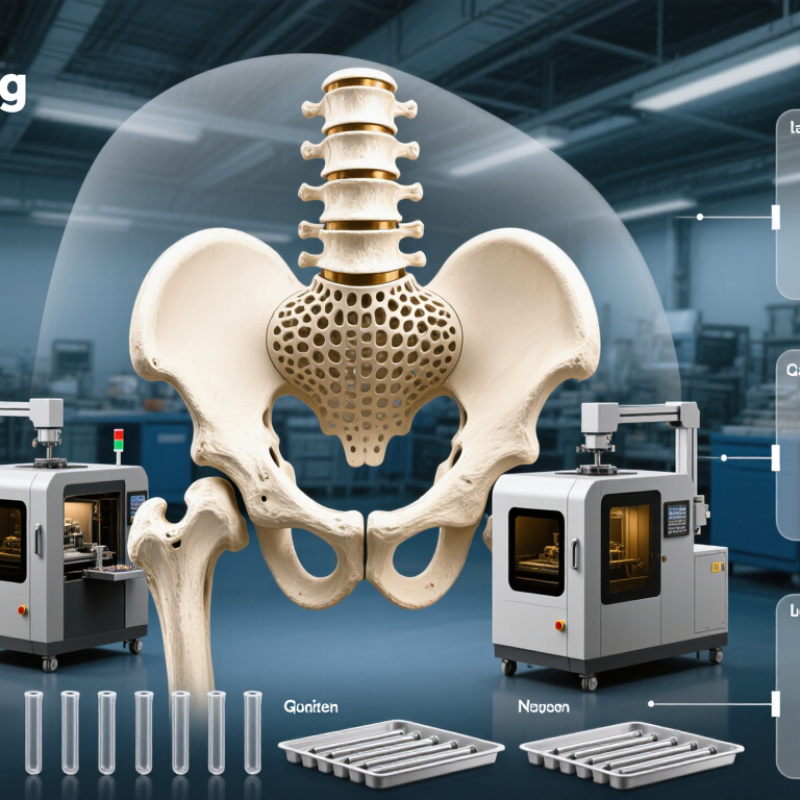
Why Is Production Tech Important for Orthopedic Implants?

The Role of Production Technology in Orthopedic Implant Manufacturing

Why Is Production Tech Important for Orthopedic Implants?

The Role of Production Technology in Orthopedic Implant Manufacturing

Production technology shapes how orthopedic implants become safe, consistent medical devices. Each stage matters, from material preparation to final inspection. CNC machining can hold tight dimensions around screw holes and joint surfaces. Additive manufacturing can create porous structures that support bone integration. However, complex geometry also creates hidden risks.

Experienced production teams combine validated processes with careful human judgment. Sensors monitor temperature, cutting force, and equipment performance during manufacturing. Coordinate measuring machines check critical features against approved specifications. Surface finishing removes sharp edges and unwanted particles. Cleanroom controls then reduce contamination before packaging. Small details matter.

Traceability connects each implant to its material batch, machine settings, operator checks, and inspection results. This record supports reliable investigation when something looks unusual. No production system is perfect. A sensor may drift, or a tool may wear earlier than expected. That possibility requires calibration, preventive maintenance, and honest review. Engineers should question stable results, not only failed ones. The strongest process is not merely fast; it is controlled, documented, and continuously improved.

Why Is Production Technology Important for Orthopedic Implants?

Production technology must control alloy composition precisely because small changes in oxygen, nitrogen, carbon, hydrogen, or iron content can affect the strength, fatigue performance, corrosion resistance, and biocompatibility of orthopedic implants.

The chart shows the specified upper composition limits for wrought Ti-6Al-4V implant material according to ISO 5832-3:2016. Titanium makes up the balance of the alloy.

How Design and Material Selection Shape Implant Performance

Why Is Production Tech Important for Orthopedic Implants?

An orthopedic implant begins with a clinical need, but design determines how that need becomes a physical solution. Engineers study bone anatomy, load paths, and movement before choosing dimensions. A hip component with rounded edges can reduce stress concentration near the joint. A spinal cage with controlled porosity may support bone integration while preserving strength. Small changes matter.

Material selection shapes performance over time. Titanium alloys offer high strength and corrosion resistance, while polymers can reduce weight and support specific imaging needs. Ceramic surfaces may reduce friction, but they demand careful control of brittleness and finishing quality. The material must also tolerate cleaning, sterilization, and repeated loading. It cannot only look suitable on a drawing.

Production technology connects these decisions to real-world reliability. Precision machining can hold tight tolerances around a bearing surface. Additive manufacturing can create internal lattice structures, yet powder removal and surface roughness require strict inspection. A polished implant may still contain hidden defects. That possibility deserves attention.

Engineers should combine dimensional checks, fatigue testing, material analysis, and traceable process records. No design is perfect. Clinical feedback can reveal wear patterns or handling difficulties that laboratory tests miss. Therefore, implant development needs technical discipline and the humility to revise assumptions when evidence changes.

Key Production Processes Used to Create Orthopedic Implants

Why Is Production Tech Important for Orthopedic Implants?

Production technology controls how safely an implant moves from digital design to the operating room. Grand View Research estimated the global orthopedic implants market above USD 45 billion in 2023. That scale increases pressure on manufacturers to reduce variation without weakening clinical performance. Computer-aided design defines geometry and contact surfaces. CNC machining then removes metal within tight tolerances. Small errors matter. For porous implants, additive manufacturing can build lattice structures that support bone integration. The U.S. Food and Drug Administration’s 2023 guidance stresses material characterization, process validation, and post-processing controls for additively manufactured devices.

Heat treatment changes strength and fatigue behavior. Surface finishing removes sharp edges and machining marks. Cleaning follows, because microscopic residue can compromise sterilization. Each batch needs dimensional inspection, chemical verification, and documented traceability. Coordinate measuring machines check critical features, while imaging can reveal internal pores or incomplete fusion. Traceability is not glamorous. It is essential. ISO 13485-based quality systems connect these records with nonconformance reviews and corrective actions.

Reported market figures vary by scope. Fortune Business Insights valued the sector near USD 44 billion in 2023, showing why consistent production remains commercially important. However, market growth does not guarantee better implants. A polished surface can still hide weak inspection practices. Manufacturers should also question whether every automated step is genuinely validated. Production technology is powerful, but it can reproduce mistakes faster.

Quality Control and Precision Standards in Implant Manufacturing

Why Is Production Tech Important for Orthopedic Implants?

Quality control begins long before an implant reaches the operating room. In my manufacturing experience, tiny deviations can affect fit, surface finish, and long-term performance. Computer-controlled machining, validated heat treatment, and digital inspection help control these risks. Coordinate-measuring machines can verify dimensions within microns. However, precision is not only a software feature. Skilled technicians must interpret measurements and investigate unusual results.

The 2024 Annual Report from the American Joint Replacement Registry tracked more than three million hip and knee procedures. Such scale makes traceability essential. Each implant should connect to material certificates, machine settings, inspection records, and sterilization data. FDA fiscal-year 2023 recall data listed more than 1,000 medical-device recalls across the industry. Not every recall involved orthopedic implants, but the figure shows why process discipline matters. A polished surface cannot compensate for weak documentation.

Standards create structure. ISO 13485 requires controlled processes, risk management, and documented corrective actions. ASTM material standards also guide testing for implant metals and polymers. Yet standards do not remove human error. We still miss things. A rushed inspection, unclear work instruction, or poorly maintained fixture can undermine excellent equipment. Manufacturers should use statistical process control, employee training, and regular equipment validation. They should also review near-misses honestly. Perfect production is an attractive idea, but continuous improvement is more credible.

How Production Technology Supports Patient Safety and Innovation

Why Is Production Tech Important for Orthopedic Implants?

How Production Technology Supports Patient Safety and Innovation

Production technology directly influences how safely an orthopedic implant performs inside the body. In regulated manufacturing, computer-controlled machining can hold tight dimensions across repeated batches. Skilled technicians still inspect critical surfaces, edges, and connection points. Small errors matter. A slight deviation may affect fit, movement, or load distribution. Digital records connect each implant to its materials, process settings, inspections, and release decision. This traceability supports accountability when questions arise.

Modern systems also support innovation without ignoring practical risks. Additive manufacturing can create porous structures that encourage bone integration. Advanced imaging and simulation help engineers study stress around hips, knees, and spinal components before production. However, a promising design is not automatically a safe design. It needs fatigue testing, dimensional checks, cleaning validation, and careful clinical review. Production teams must understand both the machine and the patient need.

Human judgment remains essential. A sensor may detect unusual vibration, but an experienced operator must investigate its cause. Calibration can drift. Software can record incorrect data. These possibilities deserve honest attention, not polished marketing language. Regular maintenance, independent inspections, controlled process changes, and clear training reduce avoidable variation. Patient safety improves when innovation is measurable, documented, and questioned at every important step.

FAQS

How does implant design influence orthopedic performance?

Design controls load paths, movement, fit, and stress distribution. Rounded edges can reduce stress near a joint. Small changes matter.

Why is material selection important for implants?

Materials must withstand repeated loading, corrosion, cleaning, and sterilization. Titanium alloys provide strength and corrosion resistance. Polymers can reduce weight.

What are the benefits and risks of ceramic implant surfaces?

Ceramic surfaces may reduce friction during movement. However, brittleness and finishing quality require careful control. Suitable on paper is not enough.

How can additive manufacturing support implant design?

It can create internal lattice structures and controlled porosity. These features may support bone integration. Powder removal and rough surfaces need inspection.

Why are tight manufacturing tolerances necessary?

Tight tolerances help maintain accurate fit and reliable bearing surfaces. Coordinate-measuring equipment can check dimensions within microns. Machines do not interpret every result.

What records should manufacturers maintain?

Records should connect each implant with material certificates, machine settings, inspections, and sterilization data. Traceability makes investigation faster. Documentation matters.

How can manufacturers reduce production errors?

They can use process monitoring, worker training, equipment validation, and fatigue testing. Unusual measurements deserve investigation. Rushed inspections remain risky.

Can laboratory testing reveal every implant problem?

No. Clinical feedback may reveal wear patterns or handling difficulties that testing misses. Engineers should revise assumptions when evidence changes. We still miss things.

Conclusion

Why is production technology important for orthopedic implants? It transforms carefully planned designs and selected materials into reliable medical devices that can support movement, stability, and long-term patient needs. Engineers must consider factors such as strength, biocompatibility, wear resistance, and anatomical fit when developing an implant. Production technology then determines how accurately these designs can be manufactured through processes such as machining, molding, additive manufacturing, surface treatment, and controlled finishing.

Consistent production is also essential for quality control and patient safety. Precise measurements, material inspections, process monitoring, and performance testing help ensure that each implant meets strict requirements for durability and reliability. At the same time, modern production methods encourage innovation by enabling more personalized shapes, complex structures, and improved surface characteristics. By combining thoughtful design, suitable materials, advanced manufacturing, and rigorous inspection, production technology supports the development of orthopedic implants that are safer, more effective, and better adapted to clinical needs.

Sophia

Sophia

Sophia is a dedicated marketing professional with an exceptional depth of knowledge about her company's products and services. With a keen understanding of market trends and customer needs, she crafts insightful blog posts that not only inform but also engage readers, enriching the company’s online......