Orthopedic implants can restore movement, reduce pain, and help people return to daily routines. Yet even a well-designed implant can fail. A painful hip, a loose knee component, or an infection around a metal surface can turn recovery into another medical challenge. Failure is not always caused by the implant itself. Surgical technique, bone quality, infection risk, activity, and follow-up care can all contribute.
The scale is substantial. The UK National Joint Registry’s 20th Annual Report (2023) recorded more than 3.2 million joint replacement procedures since the registry began. That volume makes long-term monitoring essential. Australia’s 2024 Annual Report from the Australian Orthopaedic Association National Joint Replacement Registry also tracks revision outcomes across joint and implant types. These reports show why average performance cannot predict one person’s result. Registry figures describe groups, not guarantees.
What affects the clinical effect of orthopedic implants depends on several connected factors. Implant material and design matter, but so do accurate positioning, stable fixation, and the patient’s health. Diabetes, smoking, infection, and weak bone may complicate healing. So can unrealistic expectations. Small details count: a component’s alignment on an X-ray, a wound that stays warm, or pain that does not improve as expected. These signs deserve clinical assessment, not self-diagnosis. The evidence also has limits; registry data may not capture every symptom or explain every failure. This article examines common failure mechanisms and the factors that influence implant success, while keeping individual care decisions with qualified clinicians.
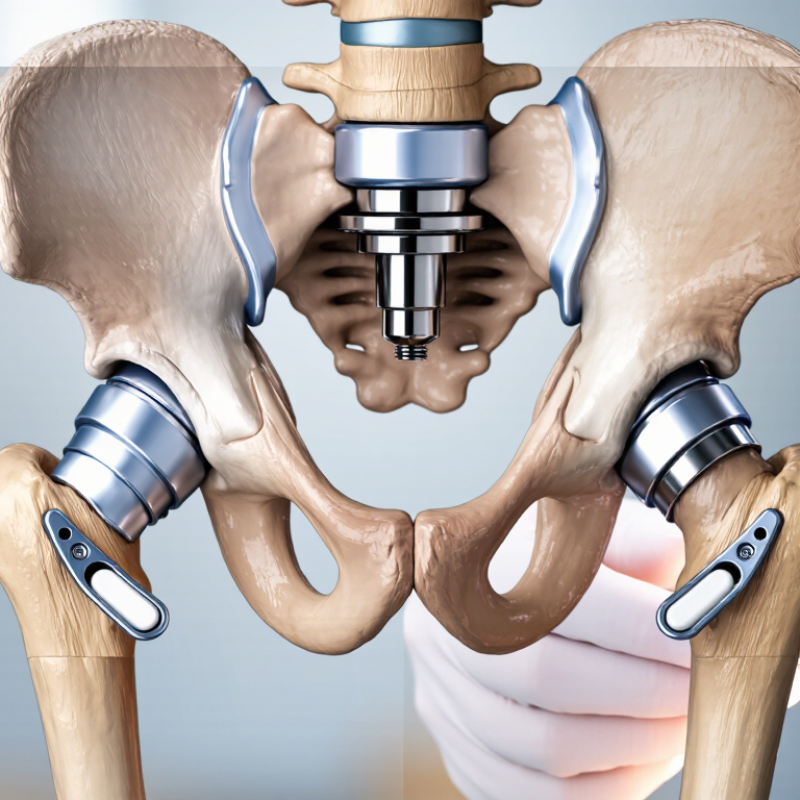
How Orthopedic Implants Function and What Failure Means
Orthopedic implants replace or support damaged joints, bones, or other structures. A hip implant, for example, uses a metal or ceramic ball and a socket to help the joint move. It should reduce pain and improve function, but it is not a natural joint. It can wear, loosen, become infected, or cause instability. A fracture around the implant may also require treatment. Pain alone does not prove failure. Clinicians assess symptoms alongside examination and imaging.
“Failure” often means the implant or surrounding tissue no longer works as intended; sometimes revision surgery is needed. A 2019 Lancet review of registry data estimated 58.4% survival at 25 years for total hip replacements. Survival generally means no recorded revision, not a guarantee of pain-free movement. The estimate reflects historical groups, not an individual forecast. Implant design, age, activity, bone health, and surgical factors can all affect outcomes. The numbers help, but they do not explain every patient’s experience.
Tips: Follow your care team’s activity and follow-up plan. Report new swelling, wound changes, fever, or worsening pain promptly. Keep a record of when symptoms began; small details can help guide an assessment.
Mechanical and Biological Causes of Implant Failure
Orthopedic implant failure often has mechanical and biological causes, and the two can overlap. A component may loosen when repeated loading strains the bond between implant and bone. Poor alignment can concentrate force on one area, while wear may release tiny particles into surrounding tissue. Over time, these stresses can damage bone or the implant itself. Small shifts matter.
Biological problems can interfere with healing around an implant. If bone does not attach securely, the interface may remain unstable. Infection is another concern; symptoms can include persistent pain, warmth, swelling, or drainage, though symptoms vary. The body may also react to wear particles with inflammation, which can contribute to bone loss. The distinction is not always neat: mechanical motion can irritate tissue, and tissue damage can weaken support.
Age, bone quality, activity level, surgical alignment, and underlying health can all affect outcomes. A person who returns to heavy repetitive activity may place different demands on an implant than someone with a lower-impact routine. Still, activity alone does not explain every failure. Clinicians assess the history, examine the joint, and may use imaging or laboratory tests to investigate the cause. No single finding tells the whole story.
Patient, Surgical, and Implant Factors That Affect Success
Why Do Orthopedic Implants Fail and What Affects Success?
A successful implant depends on more than the device. A patient’s bone quality, overall health, and daily activity all shape how well it performs. For example, weak bone may provide less support, while smoking or poorly controlled diabetes can slow healing. These factors do not guarantee failure, but they can change the risks and recovery timeline. Individual results vary.
Small details matter. During surgery, accurate positioning helps distribute force across the joint. Poor alignment can place extra stress on one area, much like an uneven shoe sole wears faster. The surgeon must also account for the patient’s anatomy, preserve healthy tissue, and reduce infection risk. Even careful planning has limits; swelling, bone shape, and other findings may differ from what imaging suggests.
The implant’s design, size, material, and fit are also important. A device that suits one person’s anatomy or activity level may not suit another’s. Over time, repeated loading can contribute to wear, loosening, or bone changes around the implant. Infection or a fracture can occur as well, and pain does not always mean the implant itself is defective. Follow-up visits and imaging can help clinicians assess changes, though no test predicts every outcome. Recovery can be uneven. A gradual return to movement, guided by the care team, helps monitor how the joint responds.
How Implant Failure Is Detected and Evaluated
An implant problem is rarely diagnosed from pain alone. A patient may report new start-up pain, warmth, swelling, or a knee that suddenly feels unstable. The clinician checks the incision, range of motion, gait, and prior imaging. Plain X-rays can reveal shifting, fracture, wear, or bone loss around the implant. Blood tests such as C-reactive protein and ESR screen for inflammation, but they do not prove infection. No single test settles it. The AJRR 2023 Annual Report covered more than three million hip and knee procedures. Registry trends help track revision patterns; they cannot explain one person’s pain.
When infection is suspected, clinicians may aspirate joint fluid and send it for cell counts and cultures. A negative culture is not always reassuring, especially after antibiotics. If results disagree, the team may add ultrasound, CT, or nuclear imaging and review the case with an infection specialist. A 2018 validation study reported 97.7% sensitivity and 99.5% specificity for the International Consensus Meeting definition of periprosthetic joint infection (Parvizi et al., Journal of Arthroplasty). These figures describe a diagnostic framework, not a guarantee for every patient. Metal artifact can obscure detail, and symptoms may precede clear X-ray changes. That uncertainty deserves honest discussion.
Why Orthopedic Implants Fail—and How Failure Is Evaluated
Implant failure can result from infection, wear, loosening, instability, or bone problems. Evaluation may combine symptoms, examination, imaging, blood tests, and joint-fluid analysis. The chart shows the weighted points assigned to preoperative tests in the 2018 International Consensus Meeting (ICM) criteria for periprosthetic joint infection (PJI); it does not diagnose infection by itself.
How to interpret: In the ICM scoring system, a preoperative score of 6 or more indicates infection, 2–5 is inconclusive, and 0–1 indicates infection is unlikely. Thresholds and interpretation can vary with clinical context, including the time since surgery. Source: Parvizi et al., The Journal of Arthroplasty, 2018.
Ways to Prevent Failure and Improve Long-Term Outcomes
Preventing orthopedic implant failure begins before surgery. The care team reviews imaging, bone quality, activity level, and medical history. A precise fit matters. Implant choice should match the joint, anatomy, and expected loads, rather than follow a one-size-fits-all plan. Patients can discuss osteoporosis, diabetes, smoking, and medicines that may affect healing. These factors do not predict failure alone, but they can change risk and follow-up needs.
During surgery, careful positioning, stable fixation, sterile technique, and protection of surrounding tissue support lasting function. Small details matter. Afterward, follow the prescribed wound-care and rehabilitation plan; rushing heavy lifting or skipping exercises can strain healing tissues. But rehabilitation should not be pushed through sharp or worsening pain. Report fever, increasing redness, drainage, sudden swelling, or a new inability to bear weight promptly. These signs need clinical assessment, not an online diagnosis.
Long-term outcomes depend on monitoring as well as the operation itself. Attend scheduled visits and imaging checks, even when the joint feels normal. A gradual change in pain, warmth, stiffness, or walking ability deserves discussion with an orthopedic clinician. Keep activity within the limits given for your implant and recovery stage. No checklist catches everything. Recommendations differ by procedure, and that uncertainty is worth discussing openly with the surgeon.
FAQS
It means the implant or nearby tissue no longer works as intended. Revision surgery may sometimes be needed.
No. Pain can have several causes. Clinicians consider symptoms, examination findings, and imaging together.
Report new swelling, wound changes, fever, or worsening pain promptly. Keep notes about when symptoms began.
Bone quality, general health, activity, implant fit, and surgical positioning can all matter. Results vary.
They may examine movement and gait, review X-rays, and order blood tests. No single test settles it.
Clinicians may test blood and collect joint fluid for cell counts and cultures. Results need careful interpretation.
One historical review estimated 58.4% survival at 25 years for total hip replacements. Survival meant no recorded revision, not pain-free movement.
No. Metal can obscure details, and symptoms may appear before X-ray changes. That uncertainty can be frustrating.
Conclusion
Orthopedic implants restore stability, alignment, and function when a joint or bone has been damaged. Failure occurs when an implant loosens, breaks, becomes unstable, or no longer supports the body as intended. Mechanical problems, such as wear or excessive stress, and biological responses, including poor bone integration or infection, can contribute to failure over time.
What affects the clinical effect of orthopedic implants includes a patient’s bone quality, overall health, activity level, and ability to follow recovery guidance, as well as the implant’s design, material, and fit. Surgical technique and accurate placement also play important roles. Clinicians evaluate possible failure through symptoms, physical examinations, and imaging, sometimes using additional tests to identify the cause. Careful planning, appropriate implant selection, sound surgical practice, rehabilitation, and regular follow-up can help reduce risks and support better long-term outcomes.

 Tonk Orthopedic Implants