Top 10 Ways to Choose Orthopedic Implants for Emergency Use?

Time:2026-09-21 Author:Amelia
0%

When a fracture arrives at midnight, implant selection becomes a clinical decision under pressure. The operating room may have limited trays, damaged soft tissue, poor bone quality, and incomplete medical records. How to select orthopedic implants for emergency medical use requires more than choosing the fastest available plate or nail.

Orthopedic trauma specialist Peter V. Giannoudis has emphasized a practical principle: “The implant should support biology, stability, and the patient’s return to function.” This idea keeps the patient at the center. Surgeons should assess fracture pattern, bone strength, contamination risk, soft-tissue condition, and the patient’s expected activity level. A long-bone fracture may need a locking plate, intramedullary nail, or external fixation system. Each option carries different demands for reduction, instrumentation, and follow-up.

Emergency teams should also check sterile packaging, expiry dates, implant compatibility, instrument availability, and product traceability. A technically excellent implant becomes unsuitable when its instruments are missing. Staff training matters too. So does access to postoperative imaging and revision care.

No checklist is perfect. A rushed choice can still appear reasonable on the first radiograph. However, careful documentation exposes weak assumptions before they become complications. This guide examines ten practical ways to compare orthopedic implants during urgent care. It considers safety, mechanical performance, biological preservation, inventory reality, and long-term patient function. The best emergency decision is rarely the most expensive one. It is the option that the trained team can place safely, verify clearly, and support responsibly.
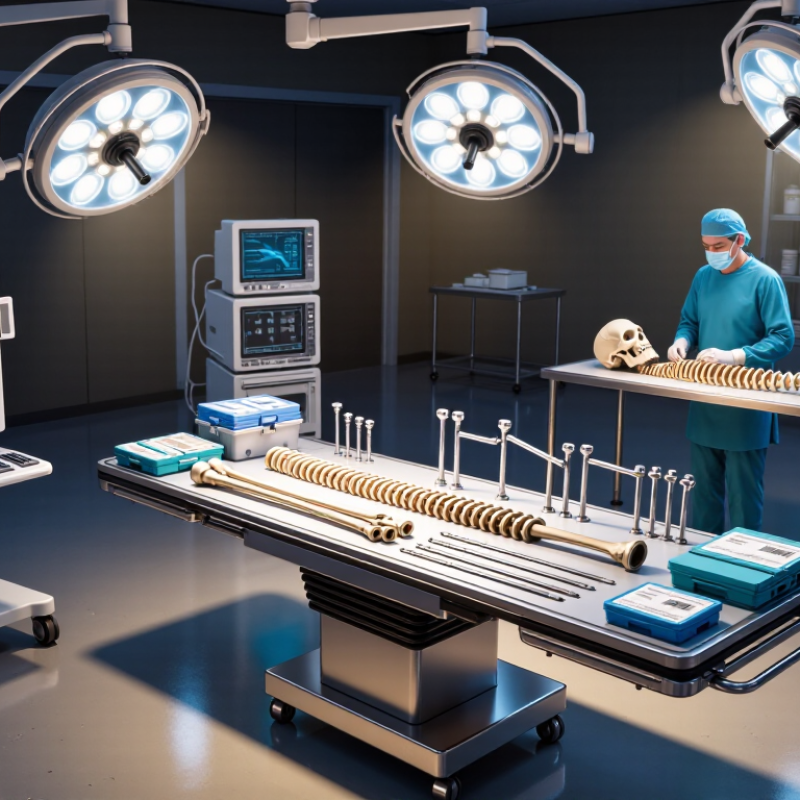
Top 10 Ways to Choose Orthopedic Implants for Emergency Use?

Define the Emergency Injury, Surgical Goal, and Implant Requirements

Top 10 Ways to Choose Orthopedic Implants for Emergency Use

Define the injury before opening the implant tray. Is it an open fracture, unstable dislocation, periarticular fracture, or multiple-trauma case? The World Health Organization’s Global Status Report on Road Safety 2023 estimates 1.19 million road deaths and up to 50 million nonfatal injuries each year. These injuries vary widely in contamination, bone loss, soft-tissue damage, and urgency. A clear injury definition prevents a convenient implant from becoming the wrong implant.

Name the surgical goal in practical terms. Restore alignment, protect blood supply, permit early movement, or provide temporary stability. The goal changes with the patient’s physiology and soft-tissue condition. A short operation may be safer than definitive fixation during shock or severe swelling. It is not always elegant. It may be necessary. CDC data report more than 800,000 fall-related hospitalizations among older adults annually in the United States, reminding teams that fragile bone and limited rehabilitation must influence fixation planning.

Then translate the goal into implant requirements: adequate strength, anatomical fit, radiographic visibility, sterile packaging, and availability in multiple sizes. Check compatibility with instruments and backup systems before incision. AO Trauma guidance emphasizes planning around fracture pattern, reduction quality, and soft-tissue status, not implant preference alone. The first plan is often wrong. Reassess after imaging, positioning, and exposure. A checklist helps, but it cannot replace judgment, communication, or documented clinical evidence.

Top 10 Ways to Choose Orthopedic Implants for Emergency Use

Define the emergency injury, surgical goal, and implant requirements before selecting an implant.

This structured index reflects common emergency orthopedic decision priorities: first characterize the injury and soft-tissue condition, then match the implant to the surgical objective, fixation demands, anatomy, available instruments, sterility requirements, imaging needs, and future revision strategy. Scores are a planning aid, not patient-specific treatment recommendations or clinical outcome rates.

Assess Implant Material, Design, Size, and Mechanical Strength

Emergency implant selection starts with the patient, not the catalog. The World Health Organization estimates that 1.71 billion people live with musculoskeletal conditions worldwide. In a crowded trauma bay, material choice matters. Titanium alloys offer high strength, corrosion resistance, and lower stiffness than stainless steel. Stainless steel remains useful when higher rigidity and cost control are important. The choice should reflect fracture location, soft-tissue condition, allergies, imaging needs, and expected healing.

Design must match the injury pattern. Locking plates can support fragile metaphyseal bone, while intramedullary nails better share loads along long bones. Smaller screws may reduce tissue disruption, but inadequate purchase can cause loosening. Measure the bone carefully using calibrated imaging. Do not rely on visual estimation. The American College of Radiology emphasizes appropriate imaging protocols before urgent orthopedic intervention, although image quality can still be limited by swelling or motion.

Mechanical strength requires more than a headline tensile value. Review fatigue testing, bending resistance, pullout performance, and material compatibility under ASTM or ISO methods. FDA orthopedic device guidance stresses validated performance testing and risk assessment, but laboratory results do not perfectly predict a patient’s recovery. That gap deserves attention. In a 2023 review of orthopedic implant failures, loosening, breakage, infection, and poor bone quality repeatedly appeared as interacting risks. Keep backup sizes available, confirm instrument compatibility, and document why the selected implant fits the patient’s anatomy and loading demands.

Verify Patient Factors, Imaging Findings, and Anatomical Compatibility

Emergency implant selection begins with the patient, not the product tray. Check age, bone quality, body weight, activity level, and injury mechanism. Review anticoagulants, diabetes, vascular disease, allergies, and previous operations. Ask about smoking and infection risk. Small details matter.

A 2021 Global Burden of Disease analysis estimated 178 million new fractures worldwide in 2019. That volume demands disciplined decisions. Confirm fracture pattern, displacement, comminution, and soft-tissue damage on current imaging. Compare plain radiographs with CT when joint surfaces or small fragments remain unclear. Measure canal diameter, implant length, offset, and available fixation zones. Anatomical compatibility must include side, size, curvature, and expected bone loss. Trial components should not force alignment.

The 2024 National Joint Registry report contains more than 3.5 million recorded joint procedures, supporting the value of outcome tracking. However, registry averages cannot guarantee emergency success. They may not reflect unstable trauma, poor bone, or limited imaging. Document why the selected fixation matches the patient’s anatomy and physiological reserve. A second reviewer can catch an overlooked mismatch. My own weak point is relying too heavily on familiar measurements when swelling distorts landmarks. Recheck the plan.

Compare Sterility, Availability, Instrumentation, and Surgical Time

Choosing an orthopedic implant for emergency use starts with sterility, not preference. Confirm the package seal, sterilization method, indicator status, expiry date, and storage history. The WHO Global Guidelines for the Prevention of Surgical Site Infection identify contaminated instruments and breaks in sterile technique as preventable risks. Keep the evidence visible. Record the lot, implant size, and sterilization details before opening.

Availability can decide the operation. A suitable implant in the hospital is safer than an ideal implant arriving tomorrow. Check local stock, backup sizes, and replacement trays. The National Joint Registry’s 2024 report shows that revision risk varies across procedures and patient factors. This supports disciplined documentation, not brand selection. Confirm compatibility with available screws, plates, imaging, and backup fixation options.

Instrumentation should be familiar, complete, and easy to assemble under pressure. Missing guides can create delays, extra handling, or hurried decisions. AORN perioperative guidance emphasizes standardized instrument processing and immediate verification. Surgical time matters too. An ACS NSQIP study published in JAMA Surgery linked longer operations with higher postoperative complication rates. Shorter is not always better. Accuracy comes first. Still, rehearsing the tray sequence can reduce avoidable minutes.

I would challenge one assumption: the newest implant may not be the safest emergency choice. Staff experience, sterility confidence, and reliable supply often matter more. No checklist removes uncertainty. That is where careful judgment remains necessary.

Confirm Safety Standards, Clinical Evidence, and Follow-Up Support

In emergency orthopedics, speed matters, but haste cannot replace verification. A suitable implant should meet recognized safety standards for materials, sterilization, labeling, packaging, and traceability. The team should inspect the lot number, expiry date, package seal, and instructions before opening it. Small details matter. A damaged seal is a stop signal, not a minor inconvenience. Local regulations and hospital protocols must guide the final decision.

Clinical evidence deserves more than a promising brochure. Look for peer-reviewed studies, registry data, and outcomes from patients with similar fractures, bone quality, and infection risks. Ask whether evidence covers the exact indication and surgical technique. A few successful cases prove little. Evidence may also be incomplete, especially for newer designs. That uncertainty should be documented and discussed with the multidisciplinary team, rather than hidden behind urgent language.

Follow-up support is part of implant safety. Confirm that trained representatives can provide technical guidance without directing clinical judgment. Secure access to surgical instructions, adverse-event reporting channels, and retrieval or revision procedures. Plan wound checks, radiographs, and functional reviews before discharge. In a rural or overstretched setting, this plan may fail. Admit that risk. Arrange a reachable contact, clear patient education, and a contingency pathway when follow-up becomes difficult. Reliable choices protect the patient beyond the operating room.

FAQS

What should guide emergency implant selection?

Start with the patient’s anatomy, fracture location, soft-tissue condition, allergies, and healing expectations. Catalog preference should come later. Imaging quality may be limited by swelling or movement.

How do titanium alloys and stainless steel differ?

Titanium alloys offer high strength, corrosion resistance, and lower stiffness. Stainless steel can provide greater rigidity and cost control. Neither material is automatically best.

How should implant design match the fracture?

Locking plates can support fragile metaphyseal bone. Intramedullary nails can share loads along long bones. The design must follow the injury pattern.

How can the correct implant size be determined?

Measure the bone with calibrated imaging. Do not rely on visual estimation. Keep backup sizes available when measurements seem uncertain.

Which mechanical tests deserve attention?

Review fatigue, bending, pullout, and material compatibility testing. Validated laboratory methods provide useful evidence. They cannot perfectly predict recovery.

What risks can cause implant failure?

Loosening, breakage, infection, and poor bone quality may interact. A strong implant can still fail in weak bone. That gap matters.

What sterility checks are necessary before opening an implant?

Confirm the package seal, sterilization method, indicator status, expiry date, and storage history. Record the lot and implant size before opening. Visible evidence helps.

How do availability and surgical time affect emergency choices?

A suitable implant in the hospital may be safer than an ideal one arriving later. Confirm compatible screws, instruments, imaging, and backup fixation options. Shorter surgery is not always better. Accuracy comes first.

Conclusion

How to select orthopedic implants for emergency medical use begins with clearly defining the injury, surgical objective, and functional requirements of the implant. Clinicians should evaluate the implant’s material, design, size, fixation method, and mechanical strength to ensure it can support the affected anatomy under expected loads. Patient-specific factors, imaging results, bone quality, medical history, and anatomical compatibility must also guide the selection process, helping reduce complications and improve surgical accuracy.

In emergency settings, practical considerations are equally important. The implant should be sterile, readily available, compatible with the required instruments, and suitable for efficient placement when surgical time is limited. Before use, the care team should confirm applicable safety standards, reliable clinical evidence, clear instructions, and access to appropriate follow-up support. A balanced decision that combines clinical needs, patient characteristics, implant performance, and logistical readiness can promote safer treatment and more predictable recovery.

Amelia

Amelia

Amelia is a seasoned marketing professional with a wealth of expertise in our company’s core offerings. With an unwavering passion for driving growth and innovation, she plays a pivotal role in shaping our marketing strategies and enhancing brand visibility. A key aspect of her responsibilities......