Counterfeit orthopedic implants can enter procurement through weak supplier controls, rushed purchasing, or incomplete documentation. A polished package does not prove authenticity. A familiar brand name does not guarantee a genuine device. This is why procurement teams need a repeatable method for checking products, suppliers, and records. The central question is simple: How to avoid counterfeit orthopedic implants in procurement without slowing safe clinical access?
Reliable verification begins before an order is placed. Teams should confirm the manufacturer’s identity, authorized distribution route, device specifications, and quality certifications. ISO 13485 records can support evaluation, but certificates require careful review. Check issuing organizations, validity dates, scope, and matching company details. Traceability should continue through purchase orders, lot numbers, serial numbers, and delivery records. Small clues matter. Packaging labels should match the implant, invoice, and manufacturer database. Any mismatch deserves documented investigation.
Practical experience also shows the value of independent checks. Procurement staff can request reference samples, conduct receiving inspections, and involve surgeons, materials managers, and quality professionals. A supplier audit may reveal unusual pricing, vague warranties, or pressure to bypass normal review. These warning signs do not automatically prove fraud. They do require patience. No checklist is flawless. Human error remains possible, especially during urgent cases. Teams should therefore review near-misses, improve training, and preserve clear escalation channels. Trust needs evidence. A defensible procurement process protects patients, clinicians, hospitals, and the credibility of every implant decision.
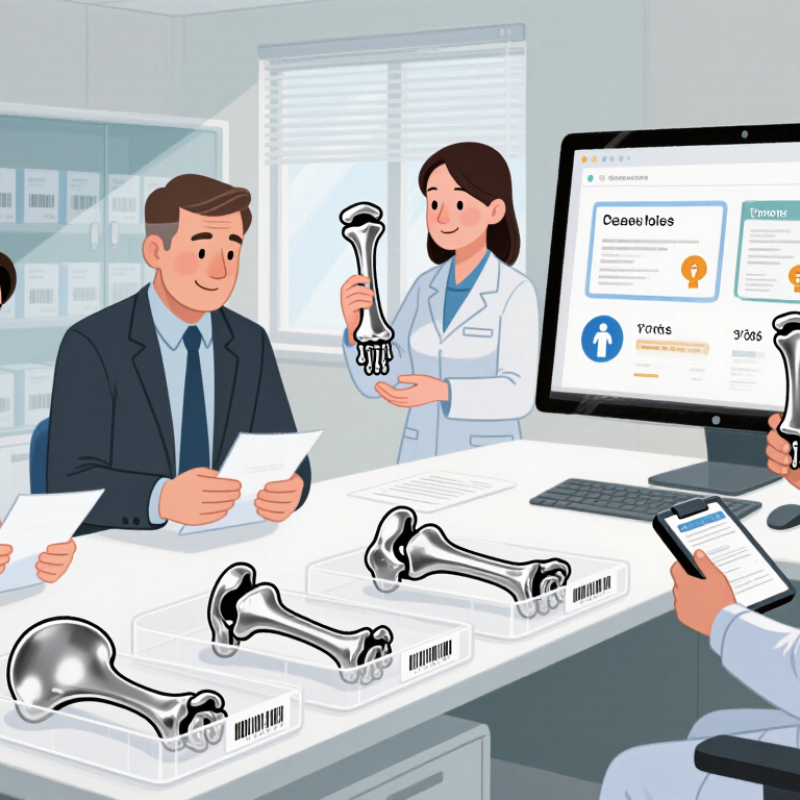
How to Avoid Counterfeit Orthopedic Implants in Procurement?
Counterfeit orthopedic implants create costs beyond the purchase price. A falsified component may show poor surface finishing, incorrect dimensions, or incomplete material records. These defects can contribute to loosening, infection, revision surgery, or delayed recovery. The financial impact then spreads across operating time, hospital beds, imaging, investigations, and patient support.
The WHO reports that about one in ten medical products in low- and middle-income countries is substandard or falsified. This figure covers medical products broadly, not orthopedic implants alone. That limitation matters. The OECD and EUIPO estimated that counterfeit and pirated goods represented 3.3% of global trade, worth about US$509 billion in 2016. Procurement teams should treat these figures as risk signals, not implant-specific failure rates. A missing data point can still hide a serious exposure.
Tips: Require batch-level certificates, material specifications, and traceable delivery records. Match packaging, labels, dimensions, and serial data before acceptance. Confirm unusual price gaps through documented supplier checks. Keep photographs and inspection notes. Separate questionable stock immediately. A checklist helps, but it cannot replace trained inspection. Procurement staff may also overtrust familiar paperwork. That is a weakness worth reviewing. Ask independent technical personnel to verify high-value or urgent purchases before surgery. Record every exception, including rushed approvals and incomplete documents.
| Risk Area | Typical Counterfeit or Irregularity Signal | Potential Clinical and Operational Impact | Risk Level | Recommended Procurement Control | Measurable Verification Indicator | Indicative Financial Exposure |
|---|---|---|---|---|---|---|
| Unverified supplier or distribution route | Unexplained intermediary, incomplete authorization records, unusual payment instructions, or a price materially below the approved market range. | Higher probability of nonconforming products, shipment seizure, investigation, emergency replacement, and delayed surgery. | High | Use approved supplier qualification, beneficial-ownership checks, documented authorization, and purchase-order-only transactions. | 100% of suppliers have current qualification records and documented authorization before purchase. | US$1,500–US$32,000 per investigation |
| Missing or inconsistent device identification | Unreadable or altered lot number, serial number, catalog number, packaging label, or Unique Device Identification data. | Loss of traceability, inability to complete targeted recall, incorrect implant selection, and delayed adverse-event reporting. | High | Scan and reconcile identifiers against the purchase order, packing list, label, certificate, and receiving record before release to inventory. | 100% identifier match rate; zero unresolved discrepancies at receiving inspection. | US$10,000–US$250,000 for quarantine, tracing, and recall administration |
| Material or dimensional nonconformance | Unexpected alloy or polymer composition, incorrect dimensions, poor surface finish, abnormal hardness, or mismatch with the approved technical file. | Fracture, premature wear, corrosion, malalignment, inflammatory response, revision surgery, and product-liability exposure. | High | Require certificates of conformity and material certificates; apply risk-based dimensional, visual, and independent material testing. | Sample test results conform to approved specifications; no critical dimensional or material deviations. | US$300–US$2,000 per independent material or dimensional test |
| Nonvalidated sterilization or compromised packaging | Broken sterile barrier, damaged seal, missing sterilization record, incorrect expiry date, or packaging inconsistent with validated configuration. | Potential surgical-site infection, procedure cancellation, patient harm, emergency replacement, and loss of inventory. | High | Inspect sterile-barrier packaging at receipt; verify sterilization method, lot release documentation, expiry date, and storage conditions. | 100% packaging inspection; zero acceptance of damaged sterile barriers or unexplained sterilization records. | US$5,000–US$50,000 per affected surgical episode, excluding patient compensation |
| False conformity or regulatory documentation | Generic certificate, altered test report, inconsistent notified-body or conformity information, or documentation that does not match the exact device configuration. | Unauthorized product use, regulatory noncompliance, shipment detention, corrective action, and suspension of purchasing privileges. | High | Verify certificates directly through the issuing conformity route and ensure that the document covers the exact product, model, lot, and intended use. | 100% document-to-device reconciliation; zero purchases released solely on an unverified certificate. | US$2,000–US$40,000 for document review, corrective action, and external assessment |
| Counterfeit packaging or labeling | Spelling errors, inconsistent fonts, poor print quality, mismatched language, missing symbols, or labels applied over earlier information. | Wrong-device selection, incorrect storage or expiry interpretation, inventory write-off, and increased risk of use error. | Medium | Use a documented visual inspection checklist and compare artwork, symbols, labeling content, and packaging configuration with the approved reference. | Receiving inspection completed for every shipment; all label deviations documented and dispositioned before release. | US$500–US$10,000 per shipment for inspection, rework, and rejected inventory |
| Uncontrolled substitution or product mismatch | Catalog number, size, side, fixation type, or accessory differs from the approved requisition or surgical plan. | Intraoperative delay, cancellation, use of an unsuitable component, additional sterilization, or emergency procurement. | High | Require dual verification by procurement and clinical staff; use barcode scanning and implant–instrument compatibility checks. | 100% match between requisition, implant label, implant tray, and surgical plan before procedure start. | US$2,000–US$20,000 per delayed or cancelled procedure |
| Weak chain-of-custody records | Manual records with missing timestamps, incomplete storage logs, unexplained inventory movements, or inability to identify the patient receiving the implant. | Delayed safety notification, broad instead of targeted recall, excess inventory quarantine, and increased legal exposure. | High | Maintain lot-level electronic traceability from receipt through storage, issue, implantation, and post-market follow-up. | At least 99% traceability completeness for lot, patient, procedure, and date records; all exceptions investigated. | US$10,000–US$100,000 for broad quarantine and manual tracing |
| Insufficient incoming inspection | Goods are released directly to clinical inventory without checking quantity, identity, packaging integrity, documentation, or expiry. | Counterfeit items can enter the operating room before detection, increasing patient-safety and recall costs. | Medium | Apply a risk-based receiving inspection and hold all high-risk implants until quality release is completed. | 100% inspection of high-risk implant shipments; inspection records retained according to the quality-management system. | US$50–US$250 per lot for routine receiving inspection |
| Failure to report and contain a suspected counterfeit | Product remains available after a discrepancy is identified, or the organization lacks a documented escalation and isolation procedure. | Repeated exposure, preventable patient harm, regulatory penalties, reputational damage, and larger recall scope. | High | Immediately place affected stock on quality hold, preserve evidence, notify the responsible quality and clinical functions, and follow applicable vigilance requirements. | Containment initiated within one business day; 100% of suspected cases have documented investigation and disposition. | US$20,000–US$100,000+ for expanded recall, remediation, and legal response |
Cost interpretation: The financial figures are indicative planning ranges in U.S. dollars, not universal prices or measured counterfeit prevalence. Actual exposure varies by country, procedure type, hospital reimbursement, device class, patient injury, recall scope, and legal requirements. Patient compensation, long-term disability, and reputational losses may substantially increase total cost.
Control framework: Align procurement controls with applicable requirements for unique device identification, medical-device quality management, risk management, biological evaluation, sterilization validation, labeling, post-market surveillance, and traceability, including relevant national regulations and standards such as ISO 13485, ISO 14971, ISO 10993, ISO 11135, ISO 11137, and applicable device-identification rules.
They may have incorrect dimensions, poor finishing, or incomplete material records. These defects can contribute to loosening, infection, revision surgery, and delayed recovery. Costs may include operating time, hospital beds, imaging, investigations, and patient support.
No. Public reports estimate that about one in ten medical products in some lower-income markets may be substandard or falsified. This figure covers medical products broadly, not implants alone. Treat it as a warning signal, not a failure rate.
Require batch-level certificates, material specifications, serial details, and traceable delivery records. Compare every document with the purchase order. Familiar paperwork can still be incomplete. That weakness deserves review.
Check the carton, inner labels, seal condition, lot number, expiry date, and serial data. Photograph the package before opening it. Compare dimensions and labels with approved records. Do not rely on appearance alone.
Quarantine the package immediately. Do not implant, relabel, or return it before investigation. Preserve seals and photographs. Record every handler and time. Small details matter.
Use restricted, clean storage with access logs and mapped locations. Keep heavy cartons away from sterile trays. Review temperature and humidity excursions. Staff should check inner labels before signing receipt.
Connect the dispatch record, carrier handover, and hospital receipt. Check seal numbers, timestamps, labels, and carton corners. Use calibrated data loggers when environmental conditions matter. Quarantine mismatched deliveries.
No. Scanning helps, but poor scanning habits can defeat it. Verify the implant, packaging, certificate, and purchase order line by line. A barcode is not proof.
Report them immediately through the competent regulatory channel and the supplier’s quality contact. Use a documented deviation process. Record rushed approvals and incomplete documents. Near misses deserve quarterly review, even without patient harm. Our process may still have blind spots.
How to avoid counterfeit orthopedic implants in procurement begins with recognizing the serious clinical, financial, and operational risks involved. Counterfeit or improperly documented implants may have unknown materials, inaccurate specifications, or unreliable performance, potentially compromising patient safety and increasing costs through recalls, treatment delays, and reputational damage. Procurement teams should assess manufacturers and suppliers carefully, confirm business credentials, review product documentation, and ensure that certificates, lot numbers, and technical specifications are complete and consistent.
Implant authenticity should also be checked through traceability records, tamper-evident packaging, labeling, and serial or batch information. Organizations should evaluate storage conditions, shipping procedures, and delivery inspections to identify damage, substitution, or temperature-related risks. Any suspected counterfeit should be isolated, documented, and reported through appropriate quality and safety channels. Finally, procurement policies should require approved suppliers, multi-step verification, staff training, regular audits, and clear recordkeeping to create a reliable supply chain and reduce the likelihood of counterfeit orthopedic implants entering clinical use.

 Tonk Orthopedic Implants